


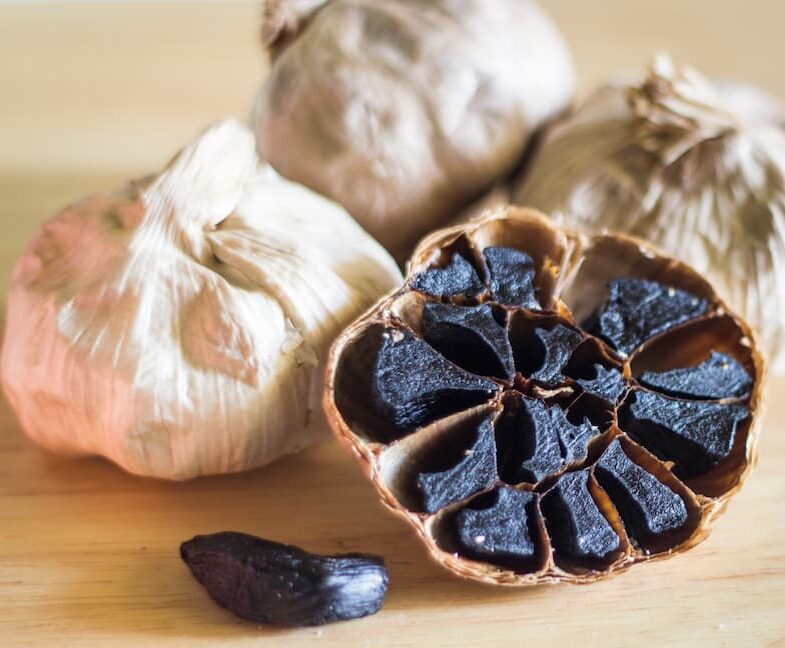
Fermented black garlic, thanks to its high concentration of bioactive compounds, is an effective ally in the prevention of oxidative stress, protecting general health.
Oxidative stress is a harmful condition for the body, caused by an excess of free radicals, unstable molecules that damage cells, promoting aging and the development of chronic diseases.
What is oxidative stress and why is it dangerous
In the human body, free radicals are formed naturally during metabolism, but their number can increase due to external factors, including:
- Air pollution
- Cigarette smoke
- diet rich in processed foods
- UV exposure
- psychophysical stress
Under normal conditions, the body has an antioxidant system that can neutralize these radicals. However, when their production exceeds the body’s defense capacity, oxidative stress occurs, which can cause:
- DNA damage
- alterations of cellular proteins
- deterioration of cell membranes
These processes increase the risk of developing chronic diseases, including cardiovascular disease, cancer, diabetes, and neurodegenerative diseases.
Fermented black garlic: a powerful natural antioxidant
Black garlic is rich in bioactive compounds with antioxidant properties that help counteract oxidative stress. Among the main ones are:
-
Polyphenols
- neutralize free radicals
- reduce inflammation
- protect cells from oxidative damage
-
S-allylcysteine and s-allylmercaptocysteine
- counteract free radicals
- enhance the activity of antioxidant enzymes (glutathione peroxidase, catalase)
-
Hydroxymethylfurfural (HMF)
- reduces the production of free radicals
- stimulates the body’s antioxidant defenses
Fermented black garlic benefits: scientific evidence
Several scientific studies confirm the positive effects of black garlic against oxidative stress:
- a 2020 study (Qiu et al.) showed that consuming black garlic significantly reduces oxidative damage at the cellular level
- research by Lee et al. (2009) showed that black garlic increases the activity of enzymes such as superoxide dismutase, glutathione peroxidase and catalase, which are essential for protecting cells from oxidative stress
Why integrate black garlic into your diet
Thanks to its antioxidant properties, black garlic is a functional food that can:
- slow down cellular aging
- protect the cardiovascular system
- improve liver health
- support the immune system
Black garlic can be easily integrated into the daily diet, consumed alone, as a condiment or in supplement form.
Conclusion
Black garlic is a powerful ally against oxidative stress, thanks to its composition rich in natural antioxidants. Its regular consumption helps protect cells from free radicals, promoting overall health and reducing the risk of chronic diseases.
To learn more about the benefits of fermented black garlic, visit the Health section.
A heartfelt thanks to Dr. Valentina Vecchi for her contribution to black garlic research, to Prof. Monica Borgatti for the academic guidance and to the University of Ferrara for its constant commitment to scientific research.
SOURCES
Colín-González, A. L., Santana, R. A., Silva-Islas, C. A., Chánez-Cárdenas, M. E., Santamaría, A., & Maldonado, P. D. (2012). The Antioxidant Mechanisms Underlying the Aged Garlic Extract- and S-Allylcysteine-Induced Protection. Oxidative Medicine and Cellular Longevity, 2012(1), 907162. https://doi.org/10.1155/2012/907162
Dai, F., Chen, W.-F., & Zhou, B. (2008). Antioxidant synergism of green tea polyphenols with alpha-tocopherol and L-ascorbic acid in SDS micelles. Biochimie, 90(10), 1499–1505. https://doi.org/10.1016/j.biochi.2008.05.007
Lee, Y.-M., Gweon, O.-C., Seo, Y.-J., Im, J., Kang, M.-J., Kim, M.-J., & Kim, J.-I. (2009). Antioxidant effect of garlic and aged black garlic in animal model of type 2 diabetes mellitus. Nutrition Research and Practice, 3(2), 156. https://doi.org/10.4162/nrp.2009.3.2.156
Pedraza-Chaverrí, J., Barrera, D., Maldonado, P. D., Chirino, Y. I., Macías-Ruvalcaba, N. A., Medina-Campos, O. N., Castro, L., Salcedo, M. I., & Hernández-Pando, R. (2004). S-allylmercaptocysteine scavenges hydroxyl radical and singlet oxygen in vitro and attenuates gentamicin-induced oxidative and nitrosative stress and renal damage in vivo. BMC Clinical Pharmacology, 4(1), 5. https://doi.org/10.1186/1472-6904-4-5
Qiu, Z., Zheng, Z., Zhang, B., Sun-Waterhouse, D., & Qiao, X. (2020). Formation, nutritional value, and enhancement of characteristic components in black garlic: A review for maximizing the goodness to humans. Comprehensive Reviews in Food Science and Food Safety, 19(2), 801– 834. https://doi.org/10.1111/1541-4337.12529
Reddy, V. P. (2023). Oxidative Stress in Health and Disease. Biomedicines, 11(11), 2925. https://doi.org/10.3390/biomedicines11112925
Rice-Evans, C. A., Miller, N. J., & Paganga, G. (1996). Structure-antioxidant activity relationships of flavonoids and phenolic acids. Free Radical Biology & Medicine, 20(7), 933–956. https://doi.org/10.1016/0891-5849(95)02227-9
Zhao, L., Chen, J., Su, J., Li, L., Hu, S., Li, B., Zhang, X., Xu, Z., & Chen, T. (2013). In vitro antioxidant and antiproliferative activities of 5-hydroxymethylfurfural. Journal of Agricultural and Food Chemistry, 61(44), 10604–10611. https://doi.org/10.1021/jf403098y