


Black garlic: what is it and how is it obtained?
Black garlic is an ingredient that is increasingly appreciated for its beneficial properties and gastronomic versatility. This fermented product, with a sweet and umami taste, is perfect for those looking for an alternative to fresh garlic without sacrificing health benefits.
Thanks to its unique combination of tradition and innovation, black garlic has become a staple both in the kitchen and in the world of natural wellness.
Let’s find out how to best use it and why it is considered an essential superfood for your diet.
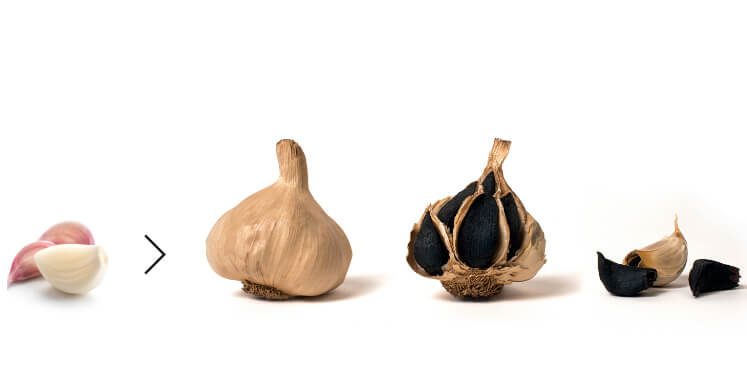
Black garlic is obtained through a natural fermentation process, during which fresh garlic is subjected to controlled temperatures (60-90°C) and high humidity (70-90%) for a period varying between 15 and 90 days.
What happens during fermentation?
- The color becomes black, thanks to the Maillard reaction, which develops melanoidins, compounds with antioxidant properties.
- The flavor changes radically: goodbye to the pungent taste, welcome sweet, balsamic and umami notes, similar to licorice or dried fruit.
- The intense smell of fresh garlic disappears, making it more delicate and suitable for everyone.
- The texture becomes soft and creamy, perfect for creams, sauces and dressings.
Thanks to these transformations, black garlic is ideal both in the kitchen and for daily well-being.
Black garlic in the kitchen: how to use it?
Black garlic in the kitchen is a real wild card for chefs and gastronomy enthusiasts. Its unique flavor and versatility make it perfect for gourmet dishes and creative recipes.
How to use black garlic in cooking?
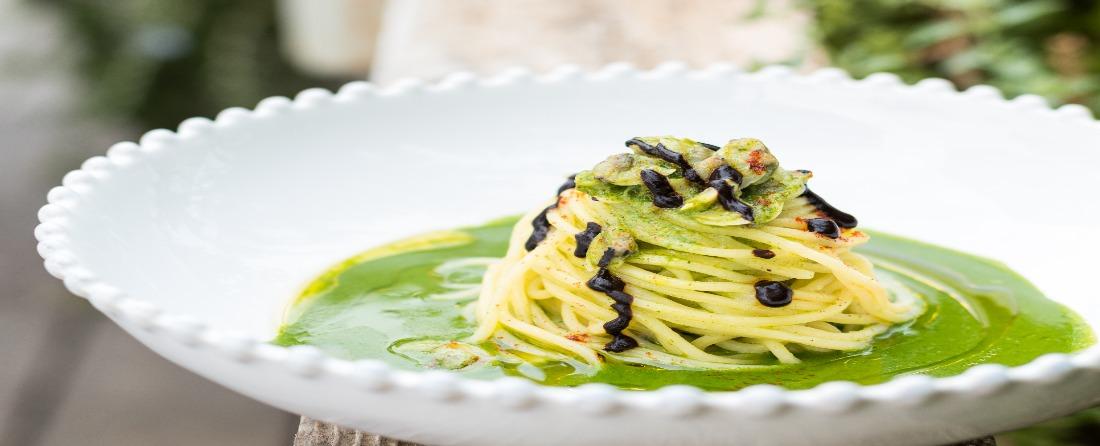
- In first courses: mixed with pasta, risotto or gnocchi for a touch of umami.
- With meat and fish: excellent for marinades and accompanying sauces.
- In salads and dressings: an amazing ingredient for sauces, vinaigrettes and dressings.
- On pizzas and bruschetta: an original addition to enhance the flavors.
- In desserts: incredible with dark chocolate to create innovative desserts.
Black garlic is also perfect for preparing an alternative pesto, to spread on toast or to use as a base for haute cuisine dishes.
If you want to discover other recipes with black garlic in the kitchen, visit our NeroFermento website and get inspired!
Black garlic and health: a natural superfood
In addition to its use in cooking, black garlic health is an increasingly discussed topic due to its extraordinary benefits. It is rich in bioactive compounds that make it a powerful natural antioxidant.
Why is black garlic good for health?
- It boosts the immune system thanks to S-allylcysteine (SAC), a sulfur compound with protective properties.
- It helps the heart and circulation, helping to reduce cholesterol and blood pressure.
- It protects cells from free radicals, slowing down aging.
- It improves digestion and supports the intestinal flora, being more digestible than fresh garlic.
- It has anti-inflammatory and antibacterial effects, useful for the general well-being of the body.
Due to these properties, black garlic is also often used as a natural supplement, in the form of capsules or extracts.
If you want to learn more about the health benefits of black garlic, check out our dedicated articles on NeroFermento.
Black garlic: a functional food to discover
Black garlic is not just a cooking ingredient, but a real superfood with positive effects on health.
- Perfect for enriching your dishes with a gourmet touch.
- An ally for well-being, thanks to its nutraceutical properties.
- Versatile and easy to use, both in the kitchen and as a natural supplement.
Whether you want to try it in a creative recipe or incorporate it into your diet for its health benefits, black garlic is an excellent choice.
Find out today on nerofermento.it and bring taste and well-being into your kitchen!
Frequently Asked Questions About Black Garlic
Is black garlic good for everyone?
Yes, it is well tolerated by most people. However, those taking anticoagulant medications should consult a doctor before incorporating it into their diet.
Can I use black garlic in all recipes?
Yes! It is extremely versatile and adapts to both savory and sweet dishes.
Where to buy quality black garlic?
You can buy it on nerofermento.it to ensure an artisanal and 100% Italian product.
Does black garlic retain its properties with cooking?
Yes, but it is preferable to add it at the end of cooking to best preserve its flavor and active ingredients.
A heartfelt thanks to Dr. Valentina Vecchi for her contribution to black garlic research, to Prof. Monica Borgatti for the academic guidance and to the University of Ferrara for its constant commitment to scientific research.
SOURCES
Ahmed, T., & Wang, C.-K. (2021). Black Garlic and Its Bioactive Compounds on Human Health Diseases: A Review. Molecules (Basel, Switzerland), 26(16), 5028. https://doi.org/10.3390/molecules26165028
Bontempo, P., Stiuso, P., Lama, S., Napolitano, A., Piacente, S., Altucci, L., Molinari, A. M., De Masi, L., & Rigano, D. (2021). Metabolite Profile and In Vitro Beneficial Effects of Black Garlic (Allium sativum L.) Polar Extract. Nutrients, 13(8), 2771. https://doi.org/10.3390/nu13082771
Chua, L. S., Abdullah, F. I., & Lim, S. H. (2022). Physiochemical changes and nutritional content of black garlic during fermentation. Applied Food Research, 2(2), 100216. https://doi.org/10.1016/j.afres.2022.100216
Kimura, S., Tung, Y.-C., Pan, M.-H., Su, N.-W., Lai, Y.-J., & Cheng, K.-C. (2017). Black garlic: A critical review of its production, bioactivity, and application. Journal of Food and Drug Analysis, 25(1), 62–70. https://doi.org/10.1016/j.jfda.2016.11.003
Martínez-Casas, L., Lage-Yusty, M., & López-Hernández, J. (2017). Changes in the Aromatic Profile, Sugars, and Bioactive Compounds When Purple Garlic Is Transformed into Black Garlic. Journal of Agricultural and Food Chemistry, 65(49), 10804–10811. https://doi.org/10.1021/acs.jafc.7b04423
Qiu, Z., Zheng, Z., Zhang, B., Sun-Waterhouse, D., & Qiao, X. (2020). Formation, nutritional value, and enhancement of characteristic components in black garlic: A review for maximizing the goodness to humans. Comprehensive Reviews in Food Science and Food Safety, 19(2), 801– 834. https://doi.org/10.1111/1541-4337.12529
Rathod, N. B., Elabed, N., Punia, S., Ozogul, F., Kim, S.-K., & Rocha, J. M. (2023). Recent Developments in Polyphenol Applications on Human Health: A Review with Current Knowledge. Plants, 12(6), Article 6. https://doi.org/10.3390/plants12061217
Rufián Henares, J., & Morales, F. (2008). Microtiter plate-based assay for screening antimicrobial activity of melanoidins against E. coli and S. aureus. Food Chemistry – FOOD CHEM, 111, 1069–1074. https://doi.org/10.1016/j.foodchem.2008.05.027
Stępień, A. E., Trojniak, J., & Tabarkiewicz, J. (2024). Anti-Cancer and Anti-Inflammatory Properties of Black Garlic. International Journal of Molecular Sciences, 25(3), Article 3. https://doi.org/10.3390/ijms25031801
Wang, H.-Y., Qian, H., & Yao, W.-R. (2011). Melanoidins produced by the Maillard reaction: Structure and biological activity. Food Chemistry – FOOD CHEM, 128, 573–584. https://doi.org/10.1016/j.foodchem.2011.03.075
Wu, J., Liu, Y., Dou, Z., Wu, T., Liu, R., Sui, W., Jin, Y., & Zhang, M. (2020). Black garlic melanoidins prevent obesity, reduce serum LPS levels and modulate the gut microbiota composition in high-fat diet-induced obese C57BL/6J mice. Food & Function, 11(11), 9585–9598. https://doi.org/10.1039/d0fo02379e