


How black garlic helps reduce chronic inflammation
Black garlic is increasingly the focus of scientific interest for its anti-inflammatory properties. Rich in bioactive compounds, it is an effective natural remedy against chronic inflammation, a major risk factor for diseases such as arthritis, diabetes and cardiovascular disease. Find out how black garlic can help you protect your body in a healthy and natural way.
What is chronic inflammation?
Inflammation is a natural response of the body to injury or infection. However, when it becomes chronic, it turns into a persistent problem that damages tissue and contributes to the development of disease. Molecules such as proinflammatory cytokines (TNF-α, IL-6) and nitric oxide (NO) play a key role in this process [Ahmed & Wang, 2021][Kim et al., 2014]..
The properties of black garlic: taste and digestibility
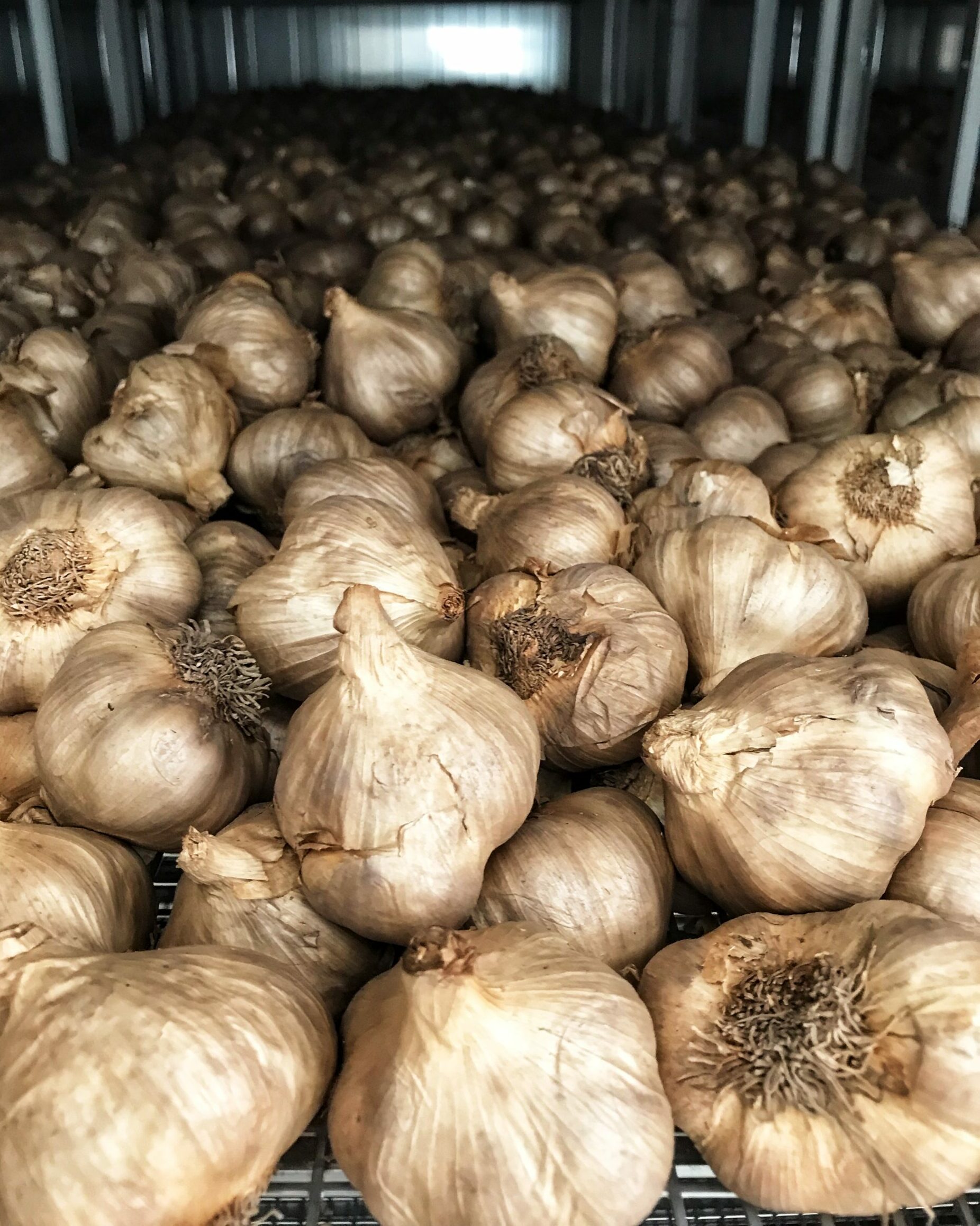
Black garlic is characterised by a complex organoleptic profile: sweet and balsamic notes, hints of liquorice, plum, balsamic vinegar and a soft, caramelised texture. The fermentation process makes it much more digestible than fresh garlic, lacking the pungent smell and gentler on the stomach.
How black garlic fights inflammation
Black garlic contains powerful bioactive compounds, such as the S-allylcysteine (SAC) and the 2-linoleoylglycerolwhich reduce inflammation through various mechanisms:
- Reduction of NO and cytokines: SAC inhibits the activity of enzymes such as nitric oxide synthase (iNOS) and cyclooxygenase-2 (COX-2), blocking the production of inflammatory molecules [Ahmed & Wang, 2021]..
- Modulation of cellular pathways: Black garlic interferes with MAPK and NF-κB signalling pathways, reducing the activation of immune cells involved in inflammation [Kim et al., 2014]..
Scientific studies
In vitro experiments and animal models show that black garlic significantly reduces TNF-α and IL-6 levels, attenuating systemic inflammation and protecting against conditions such as sepsis and arthritis [Ahmed & Wang, 2021][Kim et al., 2014]..
Thanks to its properties, black garlic establishes itself as a natural support against inflammatory diseasesimproving quality of life without significant side effects.
✨ Want to find out more about the benefits of black garlic?
Read also our articles on antioxidants and the immune system or visit our official shop to prove it yourself.
To learn more about the benefits of thefermented black garlic, visit the section Health.
A heartfelt thank you to Dr. Valentina Vecchi for her contribution to black garlic research, to Prof. Monica Borgatti for her academic guidance and to the University of Ferrara for their constant commitment to scientific research.
SOURCES
Colín-González, A. L., Santana, R. A., Silva-Islas, C. A., Chánez-Cárdenas, M. E., Santamaría, A., & Maldonado, P. D. (2012). The Antioxidant Mechanisms Underlying the Aged Garlic Extract- and S-Allylcysteine-Induced Protection. Oxidative Medicine and Cellular Longevity, 2012(1), 907162. https://doi.org/10.1155/2012/907162
Dai, F., Chen, W.-F., & Zhou, B. (2008). Antioxidant synergism of green tea polyphenols with alpha-tocopherol and L-ascorbic acid in SDS micelles. Biochemistry, 90(10), 1499-1505. https://doi.org/10.1016/j.biochi.2008.05.007
Lee, Y.-M., Gweon, O.-C., Seo, Y.-J., Im, J., Kang, M.-J., Kim, M.-J., & Kim, J.-I. (2009). Antioxidant effect of garlic and aged black garlic in animal model of type 2 diabetes mellitus. Nutrition Research and Practice, 3(2), 156. https://doi.org/10.4162/nrp.2009.3.2.156
Pedraza-Chaverrí, J., Barrera, D., Maldonado, P. D., Chirino, Y. I., Macías-Ruvalcaba, N. A., Medina-Campos, O. N., Castro, L., Salcedo, M. I., & Hernández-Pando, R. (2004). S-allylmercaptocysteine scavenges hydroxyl radical and singlet oxygen in vitro and attenuates gentamicin-induced oxidative and nitrosative stress and renal damage in vivo. BMC Clinical Pharmacology, 4(1), 5. https://doi.org/10.1186/1472-6904-4-5
Qiu, Z., Zheng, Z., Zhang, B., Sun-Waterhouse, D., & Qiao, X. (2020). Formation, nutritional value, and enhancement of characteristic components in black garlic: A review for maximising the goodness to humans. Comprehensive Reviews in Food Science and Food Safety, 19(2), 801- 834. https://doi.org/10.1111/1541-4337.12529
Reddy, V. P. (2023). Oxidative Stress in Health and Disease. Biomedicines, 11(11), 2925. https://doi.org/10.3390/biomedicines11112925
Rice-Evans, C. A., Miller, N. J., & Paganga, G. (1996). Structure-antioxidant activity relationships of flavonoids and phenolic acids. Free Radical Biology & Medicine, 20(7), 933-956. https://doi.org/10.1016/0891-5849(95)02227-9
Zhao, L., Chen, J., Su, J., Li, L., Hu, S., Li, B., Zhang, X., Xu, Z., & Chen, T. (2013). In vitro antioxidant and antiproliferative activities of 5-hydroxymethylfurfural. Journal of Agricultural and Food Chemistry, 61(44), 10604-10611. https://doi.org/10.1021/jf403098y